Real trades,
made verifiable.
Miziba is neutral infrastructure that turns an independent agricultural trade into a verified, documented transaction — from the aggregation hub to settlement.
Not a bank. Not a lender. Applying is an application for programme qualification — not for finance, and qualification does not guarantee financing.
Terms, quality and quantity are agreed before anything moves. The exit is identified before the trade begins.
Weighbridge calibration current.
Every lot has a record: photographs, a sealed retained sample and a three-point weight reconciliation.
Capital enters only once the commodity is verified and loaded. Funds never pass through Miziba.
The order cannot be changed without the finance partner's written consent.
{{ figuresNote }}
Independent traders move real volume. Banks rarely see it.
The commodity is real, the buyer is real, the margin is real. What is missing is evidence an institution can act on.
Proof does not travel
A trader's contract and a lender's comfort live in different worlds. Without independent evidence of the goods, capital stays on the sidelines.
Every trade is arranged from scratch
There is no shared rail for verification, evidence and settlement that an institution can rely on, so each transaction is structured again from the beginning.
Buyers carry delivery risk
Offtakers want certainty that what they pay for is what they receive — graded, documented and on time.
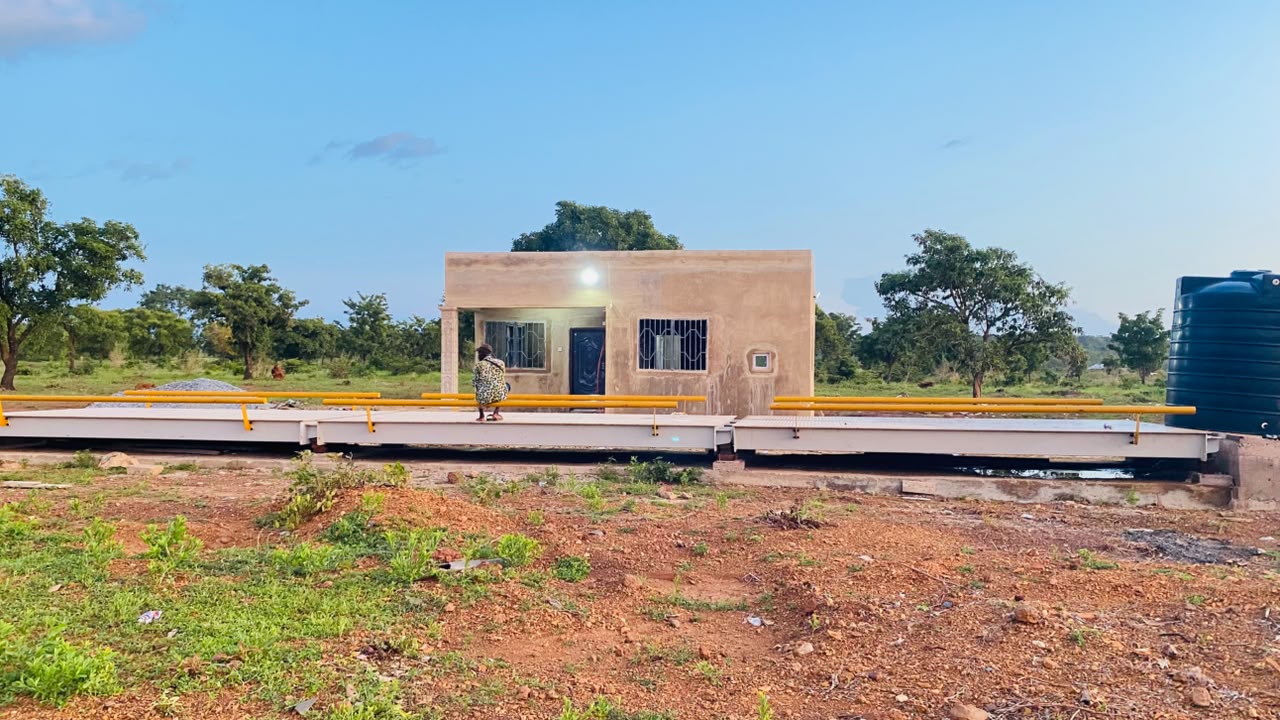
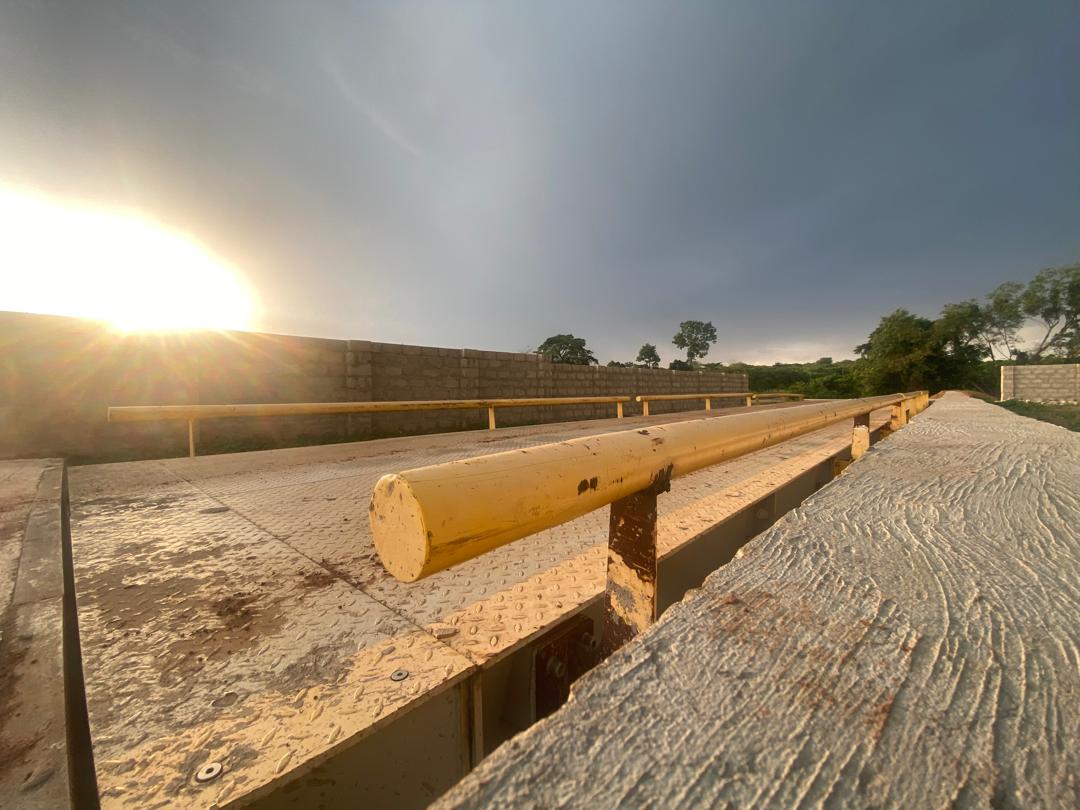
Verification needs a weighbridge.
So we built one.
A calibrated bridge and an operator office at the Hamile TradePoint. Weight is established here, on the ground, before any capital is committed against a lot.
What a verified lot actually looks like.
The three records issued on every consignment before capital moves. Each is timestamped, geotagged and sealed against the trade identifier.
Specimen documents. These show the format and fields of the records Miziba issues. They are illustrative examples, not records of an actual consignment, and the figures shown are not operating data.
Gross, tare and net on a calibrated bridge. A lapsed calibration certificate stops the lot.
Graded against the declared type, with a sealed sample retained so a later dispute has physical evidence.
A ten-item loading checklist, the truck sealed, the seal number recorded and the tracker confirmed transmitting.
Documented for credit committee review.
Miziba prepares and evidences trades. It never lends, never takes a position, and never competes with the capital that backs them.
Repaid first
A rule-based settlement order pays finance principal and fee before any platform fee or trader margin. Fixed before funding, enforced in the system.
Independently evidenced
Field verification, grading and a complete evidence trail, so the goods are identified and documented before capital moves.
Isolated by design
Each participant sees only its own trades. The one shared view is the registry of qualified counterparties, so a buyer can choose its own supplier.
Fee-only and neutral
Miziba earns a facilitation fee, the same whoever finances the trade. It does not lend, hold a position, or guarantee any outcome.
Miziba is the rail. You are the capital. The two never blur.
What Miziba is, and what it is not.
Counterparties and institutions should not have to discover any of this. It is set out here so counsel, credit and compliance can assess it directly.
It is
- A fee-earning infrastructure operator.
- An administrator of escrow accounts held at, and controlled by, financing institutions.
- A producer of verification evidence and settlement records.
It is not
- Not a bank, and not a deposit-taking institution.
- Not a lender, and not a guarantor of any transaction outcome.
- Not a holder of commodity, custody or title.
- Not a procurement agent. Buyers select their own counterparties from the qualified pool.
The Founder and Chief Executive holds a 50 per cent interest in JNI AGRI Ltd, the anchor aggregator. This is disclosed to every counterparty at the outset rather than on request, and is managed by named controls — independent second weight verification, verifier segregation, and a concentration cap on financed volume from any single aggregator. Read the governance position.
Four stages, one record.
The same sequence runs on every trade, whoever funds it. Each stage closes before the next opens, and each produces evidence.
Originate
The trader and buyer agree the trade on the platform, with terms, quality and quantity set up front.
Verify
The consignment is independently verified at a certified hub. A certificate and evidence pack are issued.
Fund
The trader funds it, the buyer pre-funds, or a finance partner backs it against the trader's equity.
Settle
Funds release against the verification, in a fixed order set before funding. Reconciliation follows within 24 hours.
Trade on your own book
Your working capital, Miziba's rails for verification and tracking. No borrowing, no finance partner. The aggregator releases goods only once your payment lands.
The buyer funds it
The buyer places the full amount into escrow before procurement begins, released against verification. No party extends credit to another under this mode.
Backed by a partner
A bank or development institution funds the bulk against the trader's first-loss equity, and is repaid first from settlement. Every transaction is approved by that institution.
Where you stand, stated plainly.
Participants are not described as verified until they are. Each status says exactly what has been established, and what has not.
Registered
You have applied and your identity is captured. Nothing has been checked yet.
Screening
Under review. We request evidence against the programme standard.
Verified
Identity, capacity and operating evidence confirmed, with documents held. This is not a credit assessment.
Eligible
You meet every programme criterion to take part in a financed transaction, when one is originated.
Credit decisions are made by participating financial institutions under their own policy, not by Miziba. A participant can be eligible and still be declined. Miziba verifies, records and settles. It does not lend, does not guarantee any outcome, and makes no representation about any participant's creditworthiness.
Tell us how you trade.
Each pathway is qualified against a different standard, so each asks different questions. Four steps, about five minutes.
Verification, where the commodity is.
Six hubs across Northern Ghana, a registered farmer base, and a documented verification standard applied to every lot that moves on the rails.
What happens at a hub
A TradePoint is a verification checkpoint, not a warehouse. Commodity arrives, is established, and moves.
- Weighing
- Gross, tare and net on a calibrated weighbridge, with the calibration certificate current. A lapsed certificate stops the lot.
- Grading
- Assessed against the declared commodity type and recorded on a quality certificate signed by the aggregator.
- Reconciliation
- Bag count against waybill, and weight reconciled at three points: hub, loading and delivery.
- Sampling
- A sealed sample retained against the trade identifier, so a later quality dispute has physical evidence.
- Photography
- Timestamped and geotagged images of the lot, the seal, the weighbridge reading and the certification.
- Loading
- A ten-item checklist completed by the field officer, the truck sealed and the seal number recorded.
- Tracking
- Tracker confirmed transmitting before departure, with geofenced checkpoints to delivery.
Miziba does not warehouse commodity, does not take custody and never holds title. Where goods are held before loading, they are held by the aggregator on its own account and at its own risk. Verification evidence, tracking and documentation establish what the goods are and where they are. They are not a proprietary interest in the goods, and are not described as collateral.
Commodities and corridors
Non-perishable agricultural commodity with an observable reference price, moving from Northern Ghana to domestic processors and export gateways.
Raw cashew nut
The primary corridor. Africa grows more than half the world's cashew and processes under a tenth of it, so processors are supply-constrained rather than demand-constrained.
Shea
Nuts and processed shea for cosmetics, ingredient and industrial buyers, with traceability to the collection group.
Sesame
Food processors, ingredient companies and importers, where specification and cleanliness carry a price premium.
Soya
Processors and feed manufacturers, with volume concentrated around harvest.
Sorghum
Industrial and brewing offtake, typically on repeat contracts with fixed specification.
Traceability
More than 10,000 registered farmer profiles allow a lot to be traced to the individual farm rather than to a collection point, which is what European deforestation requirements ask buyers to demonstrate.
Who holds a seat on a trade
Seats follow the economic functions actually present in a transaction, not a fixed template.
- Aggregator
- Sources from registered farmers, pays them from its own working capital, and supplies verified loaded commodity. Qualified against the programme supply standard.
- Trader
- Holds the offtake and executes the trade. Where a trade is financed, the trader is the borrower of record and contributes the required equity.
- Buyer
- Takes delivery under a signed offtake at a benchmarked price. On a financed trade, pays into an account held by the financing institution.
- Finance partner
- Underwrites, approves, funds and books the asset under its own credit policy. Miziba never makes the credit decision.
- Miziba
- Verifies, records, administers escrow and settles. Fee-only. Holds no commodity, takes no title, deploys no capital into any transaction.
Disclosed before it is asked.
Structure, conflicts and regulatory position, set out openly. Counterparties and institutions should not have to discover any of this.
Group structure
- Miziba Infrastructure Ltd
- The platform company. Operates verification, escrow administration and settlement. Earns a fee and nothing else. Does not lend, does not take deposits, does not trade commodity.
- Miziba Trade Facility Ltd
- A special purpose vehicle that may deploy capital into transactions as an ordinary financier, on the same terms and with the same visibility as any third-party institution. It receives no preferential treatment.
- JNI AGRI Ltd
- The anchor aggregator. Supplies verified commodity. Not owned by the group, and restricted by facility covenant to the aggregator role.
The Founder and Chief Executive of Miziba Infrastructure Ltd holds a 50 per cent ownership interest in JNI AGRI Ltd, the anchor aggregator. The remaining interest is held by its co-founder. This is disclosed to every counterparty at the outset rather than on request. Under the financing programme the aggregator is a supplier paid for delivered goods and is never a financing institution's borrower, so the relationship sits outside the credit obligation. It does not sit outside operational exposure, and is therefore managed by the controls below.
Controls on related-party supply
- Independent second weight verification from a source unrelated to the aggregator.
- Quality certification by an unrelated party, at the financing institution's election.
- Verifier segregation: no individual who verifies a lot may hold an economic interest in that transaction.
- System-captured evidence, immutable after capture, rather than hand-entered records.
- Unrestricted audit and inspection rights for any participating institution.
- A concentration cap on the share of financed volume supplied by any single aggregator, as a condition of scaling.
An independent advisory board is under formation. Until it is constituted with defined authority it is not a control, and it is not presented as one.
Regulatory position
Stated so that counterparties, counsel and regulators can assess it directly.
What Miziba is
- A fee-earning infrastructure operator.
- An administrator of escrow accounts held at, and controlled by, financing institutions.
- A producer of verification evidence and settlement records.
What Miziba is not
- Not a bank, and not a deposit-taking institution.
- Not a lender, and not a guarantor of any transaction outcome.
- Not a holder of commodity, custody or title.
- Not a procurement agent. Buyers select their own counterparties from the qualified pool.
Regulatory classification of any financing arrangement is determined by the participating institution with its own risk, compliance and legal functions, and with the Bank of Ghana where guidance is required. Nothing on this site is a determination of regulatory or accounting treatment.
Finance the trade.
Not the balance sheet.
A commodity trade finance product your institution can launch under its own brand, on shared verification and settlement infrastructure.
The structure in short
- Instrument
- A short-tenor, self-liquidating advance against a single verified commodity transaction, repaid from that trade's directed proceeds.
- Nature of exposure
- Supported by identified, insured and tracked commodity during transit, converting to buyer receivables exposure on acceptance. Not commodity-secured unless your institution separately takes and perfects a security interest. Buyer selection is the primary credit control.
- Obligor
- An independent trader. Never the aggregator, never Miziba, never a related party of either.
- Disbursement
- Advance proceeds are never disbursed to the obligor. Funds move from your own escrow to the verified aggregator, against verified loaded goods.
- Repayment
- From assigned offtake proceeds, paid by the buyer directly into your escrow under an acknowledged payment direction.
- Tenor
- 22 to 30 days domestic, measured from loading confirmation.
- What you retain
- Your credit policy, your pricing, your limits, your customer relationship, and approval authority on every transaction.
A counterparty qualified under the programme has met an operational and evidentiary standard. It has not been credit-assessed, and no representation of creditworthiness is made or implied. Your institution onboards and underwrites its own customer. Equally, you are not required to source every participant yourself: aggregators, hubs and verification capability are qualified centrally, because building rural verification is not a bank function.
Documentation available on request
Issued to banks and development institutions for product, credit, risk, legal and operations review.
Bank Product Programme
The product end to end: design principles, facility structure, security package, transaction lifecycle, risk matrix, scenario analysis, governance and implementation.
Credit and Risk Technical Annex
Quantified loss allocation, worked settlement waterfall, buyer tiering and advance-rate matrix, scorecard methodology and calibration status, title flow, security analysis and portfolio controls.
Pilot Approval Memorandum
A controlled pilot request with defined limits, maximum exposure, conditions precedent, kill switches and objective success criteria, drafted for a credit committee.
Finance Data Package and Diligence Index
A worked example of the per-transaction approval document, and the full index of evidence available for institutional diligence.
{{ applyTitle }}
{{ applySub }}
{{ stepTitle }}
{{ stepHint }}
- {{ r.k }}
- {{ r.v }}
{{ submitError }}
Application received
{{ doneMsg }}
{{ doneNote }}
Privacy and terms
What we collect when you apply, why we hold it, and the basis on which this site is provided.
Privacy notice
- Who holds your information
- Miziba Infrastructure Ltd, Accra, Ghana. Enquiries to partnerships@miziba.com.
- What we collect
- Company identity and registration details, contact details of named individuals, commercial information such as volumes, corridors and counterparties, and indications of financial capacity.
- Why we collect it
- To assess your application for participation in the network, and to match counterparties within it. We do not use it for anything else without asking you first.
- Naming other companies
- Where you name buyers or suppliers, we contact them only if you have confirmed you are content for us to do so. You can withdraw that at any time.
- Sharing with institutions
- Your information is shared with a financial institution only with your consent, obtained when a specific institution is introduced. Aggregate network statistics contain no identifiable participant and may be shared without consent.
- How long we keep it
- For as long as your application or participation is active, and for a defined period afterwards for audit. Where no relationship results, you may ask us to delete it.
- Security
- Access control, encryption in transit and at rest, and an access log.
- Your choices
- You may ask for a copy of what we hold, ask us to correct it, or ask us to delete it. Write to partnerships@miziba.com.
- Cookies
- This site sets no advertising or tracking cookies.
Terms of use
This site is provided for information and for application to the network. Nothing on it is an offer of finance, an invitation to invest, or advice of any kind. Figures describing the operating network are provided in good faith and are not a representation of financial performance. Programme documentation is issued to institutions under separate terms.
Applying to join the network is an application for programme qualification only. It does not create any entitlement to finance, and qualification does not guarantee that finance will be available. Credit decisions rest solely with participating financial institutions, made under their own policies.